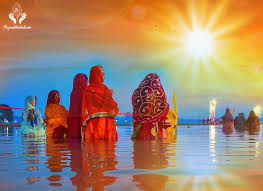
As the golden sun begins to sink behind the river, its reflection shimmers across the rippling water. Women dressed in bright saris wade into the gentle current, balancing bamboo baskets filled with fruits, sugarcane, and earthen lamps. The air carries the aroma of incense and freshly made sweets; folk songs rise softly with the evening breeze. In that peaceful moment — where thousands stand still before the fading light — faith feels as natural as breathing. This is Chhath Puja, one of India’s most soulful festivals, a celebration of the sun, nature, and human gratitude.
A Glimpse from the Origin
The word “Chhath” means “sixth” — the festival is observed on the sixth day after Diwali. It is one of the oldest known forms of sun worship, believed to have roots in the Vedic period when rituals to the Sun God were performed to promote health and prosperity.
In the Ramayana, it is said that Mata Sita observed Chhath Puja after returning to Ayodhya, offering prayers to the Sun God for peace and abundance in their kingdom. In the Mahabharata, Draupadi and the Pandavas are believed to have performed similar rituals, seeking strength and well-being. Over centuries, these stories merged with local traditions — creating a festival that blends spirituality with simplicity.
The Four Days of Faith and Purity
1. Nahay Khay (Day 1)
Devotees begin by bathing in rivers or ponds and preparing a pure, vegetarian meal — usually rice, pumpkin, and lentils. This marks the start of spiritual cleansing.
2. Lohanda and Kharna (Day 2)
The day of fasting begins, where devotees abstain from food and water till sunset. The fast ends with kheer made from jaggery and milk — the first taste of sweetness after a day of silence and faith.
3. Sandhya Arghya (Day 3)
As dusk settles, devotees gather at the riverbanks to offer prayers to the setting sun. The sight of thousands standing knee-deep in water, surrounded by flickering diyas and folk songs, creates an unforgettable glow of serenity.
4. Usha Arghya (Day 4)
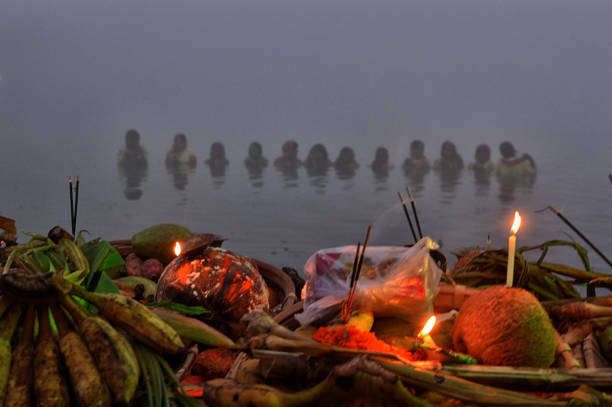
The final morning is for the rising sun, symbolizing new beginnings. Offerings of fruits, sugarcane, and lamps float across the water as chants fill the dawn air — a quiet promise of hope and gratitude.
Symbolism, Traditions, and the Food of Faith
Chhath Puja is more than a ritual — it’s a practice of balance, purity, and gratitude. Standing in the cool river during sunrise and sunset represents harmony between human life and nature — a reminder of our dependence on the elements.
The offerings, or Prasad, are made from what the earth gives freely: wheat flour, jaggery, fruits, coconuts, and sugarcane. The Thekua, a crispy sweet made from flour, ghee, and jaggery, fills homes with its comforting aroma. Every bite tastes of simplicity and devotion.
Traditional Bhojpuri songs like “Kaanch hi baans ke bahangiya, bahangi leke chali ho rani” echo softly across the ghats — songs that speak of love, motherhood, and gratitude to the Sun. Even today, whether on the banks of the Ganga or a small pond in a city park, these songs remind everyone of the same timeless bond between faith and nature.

CONCLUSION: The Quiet Grandeur of Gratitude
Chhath Puja may not have grand lights or noise, yet its silence holds great power. It teaches us that faith can be gentle, and gratitude doesn’t always need words.
Every diya that floats on the river carries a prayer — for good health, peace, and sunshine in every life. In its simplicity lies its strength, and in its discipline lies its beauty. As the sun rises again, Chhath Puja leaves behind a gentle message — to live with balance, to give thanks, and to never forget the warmth that nature so kindly shares with us.
CONCLUSION
Beyond its renowned natural beauty and rich culture, Kashmir is also home to the culinary masterpiece of Wazwan. This 36-course feast not only satiates the palate but is an integral part of the valley's culture, adding a flavorful chapter to Kashmir's identity.